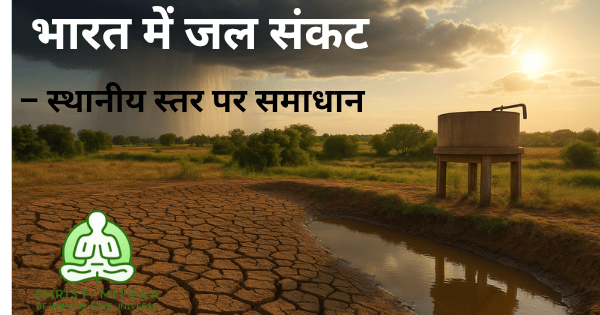

Water Crisis in India – What Local-Level Solutions Are Possible?
India is facing its most severe water crisis. Water levels are steadily falling in many states, rivers are shrinking, and even access to drinking water during the summer months is becoming a challenge. This crisis is not just the responsibility of the government or institutions—it is the responsibility of every family, every village, every citizen.
Shristi Mitraa's message is clear—“Saving water is not just an environmental solution, it is a path of compassion.”
Why is the water crisis so severe?
India's population of over 1.3 billion is putting multifold pressure on water. Rising population, unplanned urbanization, plastic waste, river pollution, excessive groundwater exploitation, and climate change are exacerbating this crisis.
Main causes:
1. Uncontrolled groundwater exploitation – pumping rates 3-4 times higher than recharge.
2. Changing climate cycle – increasing heat and erratic rainfall.
3. River pollution – sewage, chemicals, and plastic.
4. Destruction of ponds, johads, and stepwells – weakening the natural recharge system.
5. Water-intensive crops in agriculture – Water-guzzling crops like rice, sugarcane, and cotton.
Due to all these reasons, a large part of India has become a “Water-Stressed Zone”.
Why are local-level solutions important?
The water crisis will not end until villages, neighborhoods, schools, families, and society work together.
Local solutions are most effective because:
● They can be implemented immediately.
● They are easy to monitor.
● Knowledge of the local environment is integrated.
● All members of society are involved.
● Costs are low and impact is long-term.
What local solutions can help India overcome the water crisis?
Shristi Mitraa believes that water conservation is a combination of science, nature, and compassion. Below are five major solutions.
1. Rainwater Harvesting
The annual rainfall in India is enough to replenish all our water sources. The problem isn't "lack of rainfall," but "lack of storage."
How to do it?
● RWH systems on rooftops
● Large tanks on schools and government buildings
● Recharge shafts in villages
● Contour bunding in fields
● Roadside recharge pits
A single rooftop can save millions of liters of water per year.
2. Revival of ponds, johads, and traditional water bodies
Traditional ponds in Rajasthan, Haryana, Gujarat, and many areas of South India prevented water scarcity for centuries. However, these structures have disappeared in modern times.
What should be done?
● Collective labor in villages
● Removing silt/garbage from pond banks
● Keeping catchments clean
● Preventing plastic and chemical waste
● Reducing erosion by planting trees
A revived pond can recharge the groundwater level of an entire village.
3. Greywater Reuse
About 60% of all household water goes directly into the drain—water from dishes, handwashing, bathing, and laundry.
What can we use it for?
● Kitchen gardens
● Trees
● Irrigation of fields
● Community roadside trees
4. Water-Smart Farming
Crop shift of water-intensive crops is the need of the hour.
Solutions:
● Drip irrigation
● Mulching
● Water-intensive crops
● Increasing soil water-holding capacity through organic farming
As agricultural water consumption decreases, groundwater recharges faster.
5. Teaching water compassion to the community
It is essential to explain the importance of water in simple language to children, youth, women, farmers, and every segment of society.
Shristi Mitraa believes—“Only those who understand can save.”
● Water Pledge in schools
● “Save 10 liters per day” campaign in families
● Water-Friend Committees in villages
● Water conservation messages in public places
Spiritual View: Water is Compassion
Water is not just a resource—it is life. As compassion for this life develops, a person's behavior changes.
● He doesn't waste water.
● He saves water for others too.
● He considers nature a 'collaborator,' not a 'consumable.'
This is the spirit of Shristi Mitraa—“Be Humane, Save the Universe.”
Conclusion: The solution is in our hands
India's water crisis is huge, but its solutions lie in small, local actions. When every home, every neighborhood, every
भारत में जल संकट – स्थानीय स्तर पर क्या समाधान संभव हैं?
भारत जल संकट के सबसे गंभीर दौर से गुजर रहा है। कई राज्यों में जल-स्तर लगातार गिर रहा है, नदियाँ सिकुड़ रही हैं, और गर्मी के महीनों में पीने के पानी तक की व्यवस्था चुनौती बनती जा रही है। यह संकट केवल सरकार या संस्थाओं की ज़िम्मेदारी नहीं—यह हर परिवार, हर ग्राम, हर नागरिक की जिम्मेदारी है।
Shristi Mitraa का संदेश स्पष्ट है—“जल बचाना केवल पर्यावरणीय समाधान नहीं, यह करुणा का मार्ग है।”
जल संकट इतना गंभीर क्यों है?
भारत की 130 करोड़ से अधिक आबादी पानी पर कई गुना ज्यादा दबाव डाल रही है। बढ़ती आबादी, अनियोजित शहरीकरण, प्लास्टिक-कचरा, नदियों का प्रदूषण, भू-जल का अत्यधिक दोहन और जलवायु परिवर्तन इस संकट को और गहरा कर रहे हैं।
मुख्य कारण:
1. भू-जल का अनियंत्रित दोहन – पंपिंग रेट recharge से 3-4 गुना ज्यादा।
2. बदलता जलवायु चक्र – बढ़ती गर्मी और अनियमित वर्षा।
3. नदियों का प्रदूषण – सीवेज, केमिकल्स और प्लास्टिक।
4. तालाब, जोहड़, बावड़ियों का नष्ट होना – प्राकृतिक recharge तंत्र कमजोर।
5. कृषि में अधिक पानी वाली फसलें – धान, गन्ना, कपास जैसी पानी-भक्षी फसलें।
इन सभी कारणों से भारत का एक बड़ा हिस्सा “Water-Stressed Zone” बन चुका है।
स्थानीय स्तर पर समाधान क्यों महत्वपूर्ण है?
जब तक गाँव, मोहल्ले, स्कूल, परिवार और समाज मिलकर काम नहीं करेंगे, जल संकट खत्म नहीं होगा।
स्थानीय समाधान सबसे प्रभावी इसलिए होते हैं क्योंकि:
● वे तुरंत लागू किए जा सकते हैं।
● उनकी निगरानी आसान होती है।
● स्थानीय पर्यावरण का ज्ञान जुड़ता है।
● समाज के सभी लोग जुड़ते हैं।
● लागत कम और प्रभाव दीर्घकालिक होता है।
किन स्थानीय समाधानों से भारत जल संकट से उभर सकता है?
Shristi Mitraa मानता है कि जल संरक्षण विज्ञान + प्रकृति + करुणा के मेल से होता है। नीचे पाँच बड़े समाधान दिए जा रहे हैं।
1. वर्षा जल संचयन (Rainwater Harvesting)
भारत में हर साल जितनी बारिश होती है, वह हमारे सभी जल स्त्रोतों को भरने के लिए पर्याप्त है। समस्या “बरसात की कमी” नहीं, बल्कि “संग्रह की कमी” है।
कैसे करें?
● घरों की छतों पर RWH सिस्टम
● स्कूल और सरकारी भवनों पर बड़े टैंक
● गांवों में Recharge Shafts
● खेतों में Contour Bunding
● सड़क किनारे recharge pits
एक छत से प्रति वर्ष लाखों लीटर पानी बचाया जा सकता है।
2. तालाब, जोहड़ और परंपरागत जल निकायों का पुनर्जीवन
राजस्थान, हरियाणा, गुजरात और दक्षिण भारत के कई क्षेत्रों में परंपरागत तालाबों ने सदियों तक जल संकट रोका था। लेकिन आधुनिक समय में ये संरचनाएँ मिट गईं।
क्या करना चाहिए?
● गांवों में सामूहिक श्रमदान
● तालाबों के किनारों से मिट्टी/कचरा हटाना
● जल-आगमन मार्ग (catchment) साफ रखना
● प्लास्टिक और केमिकल वेस्ट रोकना
● पौधारोपण कर erosion कम करना
एक revived तालाब पूरे गांव के भू-जल को ऊपर ला सकता है।
3. ग्रे-वॉटर (Grey Water) पुन: उपयोग
घर में कुल पानी का लगभग 60% पानी सीधे नाली में चला जाता है—जैसे बर्तन धोने, हाथ धोने, स्नान, कपड़े धोने का पानी।
इसे हम किन कामों में उपयोग कर सकते हैं?
● किचन गार्डन
● पेड़-पौधे
● खेतों की सिंचाई
● सड़क किनारे सामुदायिक पेड़
4. जल-संवेदनशील कृषि (Water-Smart Farming)
अत्यधिक पानी वाली फसलों का क्षेत्रीय बदलाव (Crop Shift) समय की मांग है।
उपाय:
● Drip Irrigation
● Mulching
● कम पानी वाली फसलें
● Organic farming से मिट्टी की जल-धारण क्षमता बढ़ाना
कृषि जल खपत कम होते ही भू-जल तेजी से recharge होने लगता है।
5. समुदाय को जल-करुणा की शिक्षा
बच्चे, युवाओं, महिलाओं, किसानों और समाज के हर वर्ग को जल का महत्व सरल भाषा में समझाना आवश्यक है।
Shristi Mitraa का मानना है—“जो समझता है, वही बचाता है।”
● स्कूलों में जल-शपथ
● परिवारों में ‘प्रति दिन 10 लीटर बचत’ अभियान
● गांवों में जल-मित्र समितियाँ
● सार्वजनिक स्थानों पर जल-संरक्षण संदेश
आध्यात्मिक दृष्टि: पानी करुणा है
जल केवल संसाधन नहीं—यह जीवन है। इस जीवन के प्रति करुणा विकसित होते ही व्यक्ति का व्यवहार बदल जाता है।
● वह पानी व्यर्थ नहीं बहाता।
● वह दूसरों के लिए भी पानी बचाता है।
● वह प्रकृति को ‘सहयोगी’ मानता है, ‘उपयोग की वस्तु’ नहीं।
यही Shristi Mitraa की आत्मा है—“Be Humane, Save Universe.”
निष्कर्ष: समाधान हमारे ही हाथ में है
भारत का जल संकट विशाल है, लेकिन उसके समाधान छोटे-छोटे स्थानीय कार्यों में छुपे हैं। जब हर घर, हर मोहल्ला, हर गांव जल संरक्षण को जीवन का हिस्सा बना लेगा, तब भारत फिर से जल-संपन्न हो सकता है।
संकल्प लें:
हर परिवार हर महीने 100 लीटर पानी बचाए,
हर गांव हर साल एक तालाब पुनर्जीवित करे,
और हर बच्चा हर दिन एक गिलास पानी व्यर्थ न करे।
“पानी बचाना भविष्य बचाना है।”