
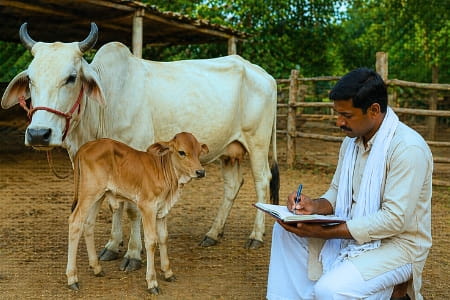
Breeding, Heifer and Replacement Planning
The foundation of next-generation planning, sound breeding decisions and herd continuity
1) Breeding is more than conception
For a small livestock farmer, breeding should not be understood only as making the cow pregnant again. It also means planning the next generation, identifying a promising heifer, making timely breeding decisions and ensuring herd continuity. A strong breeding plan reduces repeated dependence on expensive outside purchases.
2) Why is a good heifer important?
- Future milk line and adaptation depend on her
- A locally raised heifer is often better adapted
- Risk may be lower than repeated outside purchase
3) What should be monitored?
- Mother’s health and history
- Growth rate of the heifer
- Hooves, gait and body structure
- Feeding and deworming discipline
- Record keeping
4) What is replacement planning?
Every farmer should think about which animal will remain in the herd, which one is aging, which one is less productive and which animal can become the next replacement. Without planning, the farmer may be forced into sudden expensive buying.
5) Practical breeding questions
- Is the animal healthy?
- Is body condition acceptable?
- Is heat being observed on time?
- Is veterinary guidance available?
6) Message for the small farmer
Rushed crossbreeding or unplanned breeding does not ensure profit. The better path is to prioritize local suitability, health, record-keeping and future replacement needs.
7) Conclusion
A farmer who understands heifer development and replacement planning is more likely to build a stable and cost-effective herd over the long run.
If the farmer records every heifer properly, future selection becomes much better.