
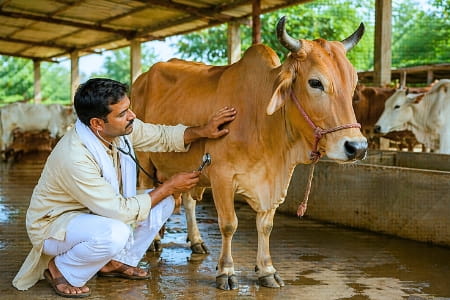
Health Management and Disease Prevention
Basic health discipline for fewer diseases, lower medicine cost and better productivity
1) The real meaning of health management
Many farmers think health management means giving medicine only after disease appears. In reality, health management means creating conditions in which the animal remains healthy in the first place. Desi cows are often more tolerant to local conditions, yet neglect, dirt, lack of water, imbalanced feed and seasonal stress can still lead to disease.
2) Why prevention matters most
- Treatment after disease is usually costly
- Milk, reproduction and work efficiency are affected
- Repeated disease lowers farmer confidence
- For a small farmer, lost time is also a loss
3) Daily health discipline
- Observe behaviour morning and evening
- Check appetite, rumination, drinking and dung pattern
- Watch eyes, nose, udder, hooves and skin
- Maintain shade, dry flooring and clean bedding
4) Seasonal precautions
Summer
- Shade and enough water
- Reduce midday stress
- Watch mineral and electrolyte balance
Rainy season
- Prevent mud and excessive moisture
- Monitor hoof rot, skin issues and flies
- Avoid moldy feed
Winter
- Provide dry shelter protected from cold wind
- Extra care for weak animals and calves
5) Vaccination and deworming
Follow local veterinary guidance for preventive schedules. This chapter does not prescribe medicines; it explains why a planned preventive schedule is better than expensive emergency treatment.
6) When to call a vet immediately
- Complete loss of appetite
- High fever or severe weakness
- Sudden drop in milk with udder problems
- Difficult calving, severe diarrhea or breathing distress
- Suspected poisoning or foreign body ingestion
7) Conclusion
The foundation of health management is timely observation, clean housing, low stress and early detection. For a small livestock farmer, this is the most profitable health investment.
A daily two-minute observation often catches a major problem at an early stage.