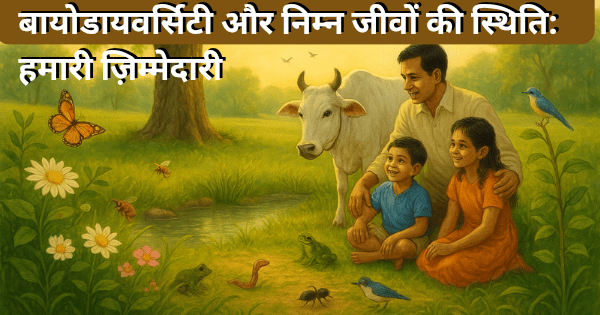

Humans are just one chapter in nature's vast book, while millions of other creatures—birds, insects, frogs, butterflies, microorganisms, and countless other species—are countless important pages in this book. Yet, in the race for modern development, the very creatures on which the Earth's balance depends are being most neglected.
Lower organisms—such as frogs, earthworms, butterflies, bees, aquatic animals, and countless microscopic species—are the Earth's health indicators. Their presence indicates how alive the soil is, how healthy the forest is, how clean the river is, and how balanced the environment is.
Frogs—Nature's Silent Sentinels
Frogs are an "Indicator Species," meaning they are the first to sense changing atmospheric temperatures, pollution, and water quality. Increasing heat and climate change in recent years have had a profound impact on frogs. Extreme heat disrupts their body temperature regulation, causing them to suffer from heat stress. This is a sign that nature is becoming increasingly unbalanced.
A decline in frogs means:
1. A breakdown in pest control systems 2. Increasing pollution of water sources 3. Pest infestations in agriculture 4. An imbalance in the food chain
Even if the number of frogs in a single village decreases, it impacts the entire local ecosystem.
Bees and Butterflies—Earth's Secret Workers
Every third morsel on Earth is made possible by the pollination of bees and butterflies. But their lives are rapidly under threat due to pesticides, plastic pollution, and rising temperatures.
If bees were to disappear, then:
The Earth's food chain would collapse in just four years.
This isn't just a scientific warning, it's a profound truth.
Earthworms—the heartbeat of living soil
Earthworms keep the soil alive. They make it friable, nutritious, and fertile. If there are no earthworms in the fields, understand that the soil is sick—and this is a clear message from nature.
Today, due to chemical farming, plastic waste, and water pollution, the number of earthworms has suddenly dropped in many places. This decline is a warning signal for the entire agricultural system.
Why are small creatures so important?
Humans think that only large creatures are important—tigers, elephants, cows, dogs, birds, etc. But the truth is that small creatures are the foundation of nature. They are the Earth's Engineers, Cleaners, Pollinators, and Balancers.
If small creatures are destroyed, the entire natural system collapses.
They are the first to be affected by climate change
Increasing heat, irregular rainfall, water scarcity, and pollution—all of these have a direct impact on lower creatures. They are immediately affected by temperature changes, their reproductive cycles are disrupted, and many species are driven towards extinction.
This is a warning.
If small creatures do not survive, then even humans cannot survive for long.
Our Role—Combining Compassion and Responsibility
Shristi Mitraa believes that compassion for nature begins not only with big actions, but with small everyday efforts. Protecting smaller creatures is the most beautiful form of human compassion.
What can we do?
1. Keep water sources clean. 2. Reduce the use of pesticides and chemicals. 3. Increase plant diversity to provide habitat for butterflies and insects. 4. Provide water and shade for birds and small creatures. 5. Save the earth and water sources from plastic waste. 6. Understand local biodiversity and participate in its protection.
Conclusion: Small creatures—big responsibility
The Earth's balance is not maintained by "big" creatures, but by those "tiny" creatures that are invisible. They are the foundation of nature's creation.
If humans protect small creatures with compassion and awareness, the Earth can be safe for future generations. Compassion is not just a feeling—it is our moral duty to every living thing on Earth.
“The beauty of life lies in diversity—and saving diversity is the first step to human compassion.”
प्रकृति की विशाल पुस्तक में मनुष्य केवल एक अध्याय है, जबकि करोड़ों अन्य जीव-जंतु—पक्षी, कीट-पतंगे, मेंढक, तितलियाँ, सूक्ष्मजीव और असंख्य प्रजातियाँ—इस पुस्तक के अनगिनत महत्वपूर्ण पृष्ठ हैं। फिर भी, आधुनिक विकास की दौड़ में सबसे अधिक उपेक्षित वही जीव हो रहे हैं, जिन पर पृथ्वी का संतुलन टिका हुआ है।
निम्न जीव (Lower Organisms)—जैसे मेंढक, केंचुए, तितलियाँ, मधुमक्खियाँ, जल-जीव और असंख्य सूक्ष्म प्रजातियाँ—धरती के स्वास्थ्य संकेतक हैं। इनकी उपस्थिति बताती है कि मिट्टी कितनी जीवित है, जंगल कितना स्वस्थ है, नदी कितनी स्वच्छ है, और पर्यावरण कितना संतुलित है।
मेंढक — प्रकृति के मौन प्रहरी
मेंढक एक “Indicator Species” हैं, अर्थात् वे वातावरण के बदलते तापमान, प्रदूषण और जल गुणवत्ता को सबसे पहले महसूस करते हैं। हाल के वर्षों में बढ़ती गर्मी और जलवायु परिवर्तन ने मेंढकों पर गहरा असर डाला है। अत्यधिक गर्मी के कारण उनके शरीर का ताप-नियंत्रण बिगड़ जाता है, जिससे वे हीट स्ट्रेस का शिकार हो जाते हैं। यह संकेत है कि प्रकृति भीतर से असंतुलित हो रही है।
मेंढकों की कमी का अर्थ है:
1. कीट नियंत्रण का तंत्र टूटना 2. जल-स्त्रोतों का प्रदूषण बढ़ना 3. कृषि में कीट-आक्रमण 4. खाद्य श्रृंखला का असंतुलन
यहाँ तक कि एक गाँव में भी यदि मेंढकों की संख्या घटती है, तो इसका असर पूरी स्थानीय पारिस्थितिकी पर पड़ता है।
मधुमक्खियाँ और तितलियाँ — पृथ्वी की गुप्त कर्मयोगी
पृथ्वी पर हर तीसरा निवाला मधुमक्खियों और तितलियों की परागण क्रिया के कारण संभव होता है। लेकिन कीटनाशकों, प्लास्टिक प्रदूषण और तापमान वृद्धि के कारण इनका जीवन तेज़ी से संकट में है।
यदि मधुमक्खियाँ समाप्त हो जाएँ, तो:
केवल चार वर्षों में धरती की खाद्य संरचना ढह जाएगी।
यह बात केवल वैज्ञानिक चेतावनी नहीं, एक गहरी सच्चाई है।
केंचुए — जीवित मिट्टी की धड़कन
केंचुए मिट्टी को जीवित रखते हैं। वे मिट्टी को भुरभुरा, पोषक और उपजाऊ बनाते हैं। यदि खेतों में केंचुए नहीं हैं, तो समझिए कि मिट्टी बीमार है—और यह प्रकृति का स्पष्ट संदेश है।
आज रासायनिक खेती, प्लास्टिक-वेस्ट और जल प्रदूषण के कारण केंचुओं की संख्या कई स्थानों पर अचानक गिर गई है। यह गिरावट पूरे कृषि-तंत्र के लिए खतरे की घंटी है।
छोटे जीव इतने महत्वपूर्ण क्यों?
मनुष्य सोचता है कि केवल बड़े जीव महत्वपूर्ण हैं—बाघ, हाथी, गाय, कुत्ते, पक्षी आदि। लेकिन सत्य यह है कि प्रकृति का आधार छोटे जीव ही हैं। वे पृथ्वी के Engineers, Cleaners, Pollinators और Balancers हैं।
यदि छोटे जीव टूट जाएँ, तो पूरा प्राकृतिक तंत्र ढह जाता है।
जलवायु परिवर्तन का सबसे पहला असर इन्हीं पर होता है
बढ़ती गर्मी, अनियमित वर्षा, जल-संकट और प्रदूषण—इन सबका सीधा प्रभाव निम्न जीवों पर पड़ता है। वे तापमान बदलने पर तुरंत प्रभावित हो जाते हैं, उनके प्रजनन चक्र रुक जाते हैं, और कई प्रजातियाँ विलुप्ति की ओर बढ़ने लगती हैं।
ये चेतावनी है।
यदि छोटे जीव नहीं बचेंगे, तो मनुष्य भी लंबे समय तक सुरक्षित नहीं रह सकता।
हमारी भूमिका — करुणा और जिम्मेदारी का मेल
Shristi Mitraa का मानना है कि प्रकृति के प्रति करुणा केवल बड़े कार्यों से नहीं, बल्कि रोज़मर्रा के छोटे प्रयासों से शुरू होती है। निम्न जीवों की रक्षा मनुष्य की करुणा का सबसे सुंदर रूप है।
हम क्या कर सकते हैं?
1. जल-स्त्रोतों को स्वच्छ रखें। 2. कीटनाशकों और रसायनों का उपयोग कम करें। 3. पेड़-पौधों की विविधता बढ़ाएँ ताकि तितलियों और कीटों को आवास मिले। 4. पक्षियों और छोटे जीवों के लिए पानी और छाया की व्यवस्था करें। 5. प्लास्टिक वेस्ट से धरती और जल-स्रोत बचाएँ। 6. स्थानीय जैव विविधता को समझें और उसकी रक्षा में भाग लें।
निष्कर्ष: छोटे जीव — बड़ी जिम्मेदारी
पृथ्वी का संतुलन “बड़े” जीवों से नहीं, बल्कि उन “नन्हें” जीवों से चला है जो दिखाई भी नहीं देते। वे प्रकृति की रचना का आधार हैं।
यदि मनुष्य करुणा और जागरूकता के साथ छोटे जीवों की रक्षा करे, तो पृथ्वी आने वाली पीढ़ियों के लिए सुरक्षित बन सकती है। करुणा केवल भावना नहीं—धरती के हर जीव के प्रति हमारा नैतिक कर्तव्य है।
“जीवन की सुंदरता विविधता में है — और विविधता को बचाना मानव करुणा की पहली सीढ़ी है।”